How a paramedic exposed the 70-PPM lie that can cost any host their Superhost status, their reviews — and everything in a lawsuit
“It was 2 AM when my phone rang. On the other end my guest, in a voice I'll never forget: ‘I can't get my son to wake up.' In my place. Under my roof. And my detector? Green light. Not a single sound.”
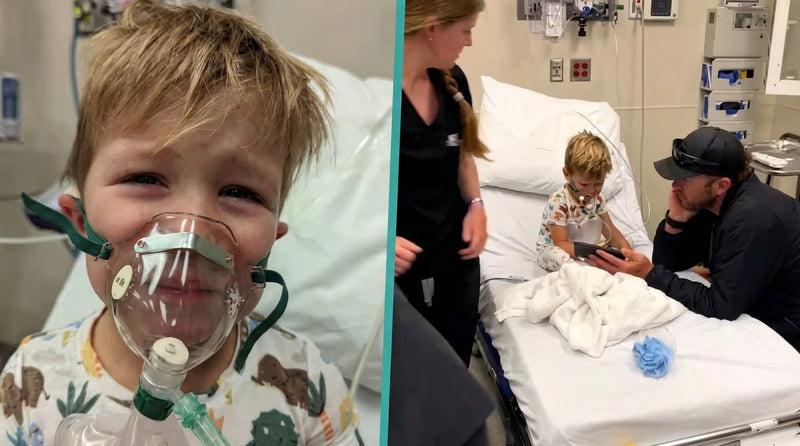
The paramedic found in two minutes what my detector hid all night
I was always the host who does everything right.
Sheets freshly pressed. A little welcome treat on the table. A check-in thought through to the last detail. Four years, over 600 guests, almost all five stars. Last year, the Superhost badge. This vacation rental wasn't just income — it was my pride.
In November, a young mother booked four nights. Her and her son, seven years old. “A little getaway,” she wrote. I had everything ready. Even cookies for the little one.
On the second night, just after two, my phone rang.
Her voice was heavy, slurred. “Something's wrong. I'm so dizzy. And I can't really wake my son.” I live ten minutes away. I've never gotten dressed so fast. On the way I dialed 911.
The ambulance arrived almost the same time I did. And the moment the paramedic stepped through my front door, his meter started beeping.
“31 PPM. Right here at the door,” he said. Then he walked through the rooms. Living room: 36. The hallway: 39. The bedroom where the boy lay: 44.
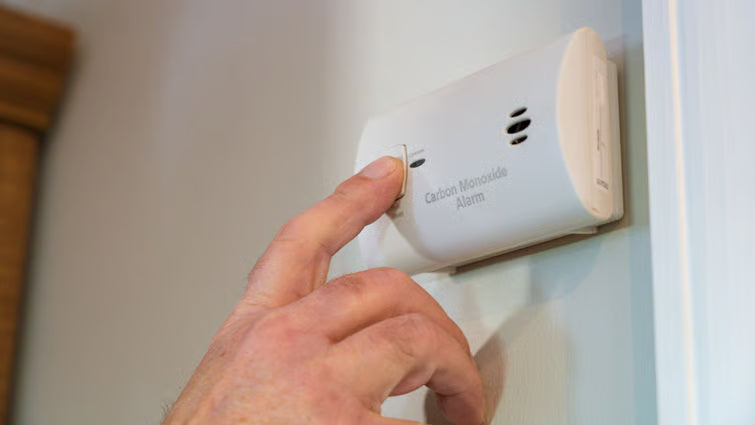
I pointed at the carbon monoxide detector on my wall — the one I'd bought specifically to be a responsible host. Green light. Silent. “Why didn't it go off?” I asked.
He glanced at me. “These don't alarm until 70 PPM. And even then only after one to four hours. Your guests have been breathing poison for hours. The device ‘knew.' It just didn't think it was worth alarming.”
They took the mother and son away. I stood in my perfect vacation rental, the green light still glowing, and for the first time it hit me: I had almost sent them into a sleep they'd never wake up from.
“I see this more often than you'd think”
The next morning I called an HVAC technician. I needed someone to tell me how bad it really was.
The technician found the problem in half an hour: a crack in the furnace's heat exchanger. Invisible. Odorless. Exactly the kind of fault that develops between two inspections and nobody notices — until someone gets sick.
I asked him if I'd just had bad luck. If this was unusual. He shook his head. “I see this more often than you'd think. Especially in short-term rentals. Different people, different beds, nobody really knows the system. And on the wall hangs a cheap detector with a green light.”
Then he said something I've never forgotten: “The problem isn't broken detectors. It's detectors that work exactly as built. They're made to stay silent until it's almost too late.”
The 70-PPM lie nobody talks about
After that, I couldn't let it go. For weeks I read everything. Studies, fire-department warnings, forums where others described their own near-disasters. What I found left me stunned.
Here's what the detector industry doesn't tell you: conventional, cheap detectors are designed to alarm only at around 70 PPM. And not even right away:
- 70 PPM → alarm after 60–240 minutes
- 150 PPM → alarm after 10–50 minutes
- 400 PPM → alarm after 4–15 minutes
Read that again. At 70 PPM — the level where your detector finally wakes up — your guests have already been breathing poison for one to four hours.
People who trusted you. Families with small children. Older couples. And the detector stays silent. Green light. Because its design says that's fine.
- Hundreds of deaths a year in the U.S. from CO poisoning
- Tens of thousands of poisonings a year treated in the ER
- Oct–Mar: most incidents during heating season — exactly your peak season
- Almost every victim had a “working” detector
What few hosts know: in the end, you're liable
There's a part of this story that kept me awake long after my guests were okay again.
As a host, you have a duty of care. In plain terms: if you let people stay in your place for money, you're responsible for keeping it free of avoidable hazards. A court can read that strictly.
If something goes wrong and a guest is hurt, that can mean: you're liable for their medical bills, their lost income, pain-and-suffering damages — and in the worst case, a charge of criminal negligence. Many hosts also assume their insurance will cover it. But if a reasonable safety measure was missing, the payout can be reduced or denied entirely. And in many states a working CO alarm in a rental isn't optional — it's the law.
A reliable CO and gas detector is exactly that reasonable measure. It's the difference between “I did everything that could be expected of me” and “Why was there only a cheap green-light box on the wall?”
And don't forget the second front: one story of a guest who ended up in the hospital in your place — and your calendar is empty. The Superhost badge gone. A review every future guest reads first.
Why cheap detectors fail hosts most of all
These cheap detectors have three fatal weaknesses — and for hosts each one counts double:
Weakness 1: They wait until it's almost too late. They don't alarm until 70 PPM. By then your guests have been breathing poison for hours — and you're not even there to notice.
Weakness 2: They show a light, no numbers. Your guest sees a green light and thinks all is well. Nobody knows what's really in the air. Levels can climb all night.
Weakness 3: They don't detect natural gas. If the furnace, stove or water heater in your place leaks gas — these detectors stay completely silent.
And here's the truly insidious part: the very design creates a false sense of safety. Your guests see the green light and feel protected. You check “detector installed” off your list and sleep easy. The test button? It only checks battery and speaker — not whether the sensor is even still alive.
And the worst part: the same detectors that stay silent in a real emergency scream at 3 AM over absolutely nothing. For a host that's its own nightmare:
“The CO detector in the unit went off at 3 AM for no reason. Couldn't sleep, checked out the next day.” — from a guest review
“Constant false alarms, guests complain. Eventually you just take the thing out.” — from a host forum
That's exactly how it starts: cheap detectors cry wolf until the host unplugs them. And then they're silent in a real emergency. The system isn't simply bad. It's designed to fail.
What the pros actually use
After that night I asked everyone — the paramedic, the HVAC technician. Same question: “Which detector do YOU trust?” Same answer:
“One that shows real numbers. In real time. So you can see exactly what's in the air — not just that the power's on.”
The technician added:
“Anyone who lets strangers sleep at their place should get a device that shows low levels early. Normal detectors only react when it's already far from early.”
That's when I first heard the name SecureBreath.
The detector that doesn't wait until your guests are poisoned
SecureBreath is unlike any detector I had before. No green light. Instead, a display. With a number.
When there's no carbon monoxide in the air, it reads “0.” Not a light that could mean anything or nothing. A real zero. In real time. Every second. Your guest sees it. You see it on every cleaning, every turnover. Not hope. Not trust. See.
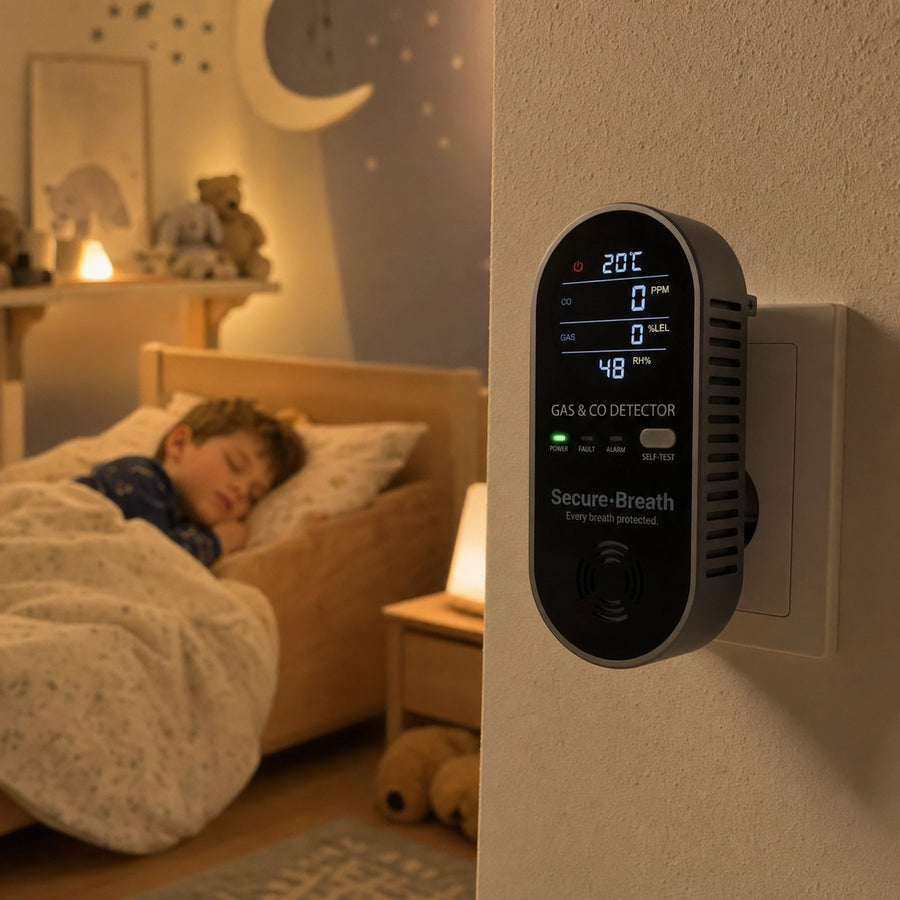
And unlike conventional detectors that wait until 70 PPM: SecureBreath shows it the moment levels start to rise. 10 PPM? You see it. 44 PPM — the level in the boy's room that night? Visible long before, with plenty of time to ventilate and act. Hours before a conventional detector would make a single sound.
Total protection at a glance
SecureBreath detects every hazard at once:
- Carbon monoxide — from the first PPM, not at 70.
- Natural gas — catches leaks at the furnace, stove and water heater.
- Propane — for places with tanks or propane appliances.
- Temperature & humidity — for the room comfort your guests mention in reviews.
No gaps. No blind spots. Complete protection — in every place that carries your name.
The turning point for my business — and my sleep
I ordered SecureBreath that same week. For every place I rent. I plugged the first one in next to the furnace. The display lit up: “0”.
Real numbers. In real time. For the first time since that night, I knew my guests were safe — not because a green light claimed so, but because I could see the proof.
I put the second in the hallway outside the bedrooms — exactly where my old detector had glowed green while my guests breathed poison. Today I glance at it on every turnover. Zeros everywhere. That's all I need to see.
The young mother and her son are doing well again. They reached the hospital in time — just barely. I messaged her, apologized, told her what I'd changed since. You know what she replied? She rebooked with me. “Because I know you're now the host who really pays attention.”
That one message meant more to me than any badge. Today the same sentence shows up in my reviews more and more: “We felt completely safe.” For a host, there's no better words.
What cheap detectors really cost a host
Something uncomfortable: most big-box stores don't carry professional-grade detectors. Why? Because cheap detectors have the better margin. A few dollars to make, many times that at the register.
But let's do the math differently. What does a cheap detector really cost you when it fails? A night in the hospital for your guest. A lawyer's letter. Damages. A suspended listing. The Superhost badge — gone. A review every future guest reads first. An empty calendar in your best season. Years of work wiped out in a single night.
Next to that, $50 per detector isn't a price. It's the cheapest insurance you'll ever buy.
SecureBreath is different.
- Professional-grade sensor — precise readings from the first PPM.
- Real-time digital display — see real numbers, not a meaningless light.
- 3-in-1 detection — carbon monoxide, natural gas and propane in one device.
- Shows danger from the first PPM — not at 70, when it's already too late.
- Plug-in — no ladder, no tools, no electrician. Ready in 30 seconds, in every unit.
The paramedic told me:
“I recommend SecureBreath after every call like this. The green-light detectors are just a checkbox on a list. This device actually protects your guests.”
I'll say it plainly: a single green-light detector can cost a guest their life and you your business. That's the price nobody talks about.
In a pack, SecureBreath works out to under $50 per detector. But it isn't about the money. It's about looking at a zero on turnover and knowing — not hoping — that your guests slept safe. It's about not becoming the host the paramedic talks about on his next call.
Your guests deserve real protection — so does your business
The manufacturer only runs new production batches every few months. With demand this high, after a sell-out it can take weeks before SecureBreath is back in stock. Right now the best price applies:
Each order includes: ✓ Lifetime guarantee✓ Free shipping
Two possible futures
Future 1: You keep trusting the green light. And hope it means something. Risking becoming the host whose guest doesn't wake up one morning — and who then learns what a single night does to an entire business.
Future 2: In every one of your units, a display shows the real number. Your guests see it. They sleep easy. And your reviews say: “We felt completely safe.”
The choice is obvious. Don't wait for the near-miss in your own place. I got lucky. A paramedic arrived in time. You may not get that luck.
What other hosts are saying
“I rent three vacation homes. After a near-miss at a colleague's place, I plugged in SecureBreath everywhere. Now I see the ‘0' on every turnover — and sleep easy. Best tool I've ever bought for my business.”
“A guest wrote in her review that she felt especially safe because of the detector with the display. That kind of thing sells the next booking.”
“As a Superhost I live on trust. A green light isn't enough for me. I want to see the number — and so do my guests.”
Reviews are placeholders and must be replaced with real, verified reviews before publishing.

Protect your guests – and your business – with SecureBreath
Check below whether the 52% discount and free shipping are still available.
Check availability →Advertisement. This post is a paid advertisement, not an editorial article.
SecureBreath is a carbon monoxide (CO) and gas detector. Always follow the installation and placement instructions. © KYNALIA LLC. All rights reserved.